Mulch is the cheapest thing you can do for a landscape bed and the easiest thing to get wrong.
Too little and you're just decorating. Weeds push right through and the soil dries out. By August the bed looks the way it did before you started. Too much and you cause real damage. Roots suffocate and water runs off instead of soaking in. The plants you were protecting start declining, and nobody connects it back to the mulch.
The right answer sits in a narrow band. Most beds are on one side of it or the other. Getting it right is the whole point of mulch installation.
There's a second question underneath the first one, and it's the one that actually determines what you pay. Not how deep, but how many cubic yards. That's the number most people guess at. Guessing is how you end up with half a pile left over. Or a bed that ran short. Here's how to get both right before anybody orders a truckload of mulch.
Two to Three Inches, and Why the Range Matters
Two to three inches is the working range for most landscape beds. That's the finished depth after the mulch settles, not the height of the pile going down.
Under two inches, mulch doesn't do its job. It won't block enough light to stop weeds and it won't hold enough moisture to matter in July.
Past four inches you start creating problems. Water can't get through a thick mat to reach the roots underneath. Fine roots start growing up into the mulch layer instead of down into the soil. That leaves them exposed the first time things dry out.
Where you land in that range depends on the bed. Established shrubs handle three inches fine. Beds with perennials and annuals do better closer to two.
Never Pile It Against the Trunk

This is the single most common mulch mistake, and you can spot it on half the properties on any street.
Mulch piled against a tree trunk in a cone traps moisture against the bark. Bark isn't built to stay wet. It stays wet, it rots, and the tree loses the tissue that moves water and nutrients up from the roots.
It also gives rodents a covered place to chew the base over the winter. They're hidden from everything that would otherwise eat them.
Pull the mulch back so you can see the root flare where the trunk widens at the ground. A few inches of clearance is plenty. The bed should look flat, not like the tree is growing out of a volcano.
Doing the Math Before You Order
Mulch is sold by the cubic yard. One cubic yard covers roughly 100 square feet at three inches deep. At two inches it covers closer to 160.
Measure your beds. Length times width gives you square feet, and irregular beds are fine to break into rectangles and add up.
Divide your total square footage by the coverage number for the depth you want. That's your cubic yards. Round up, because you'll always find a spot you forgot about.
Bagged mulch is a different unit. Bags usually run two or three cubic feet, and there are 27 cubic feet in a cubic yard. Past a few small beds, bulk delivery means less handling and less plastic to get rid of.
Clean and Edge First, Then Mulch
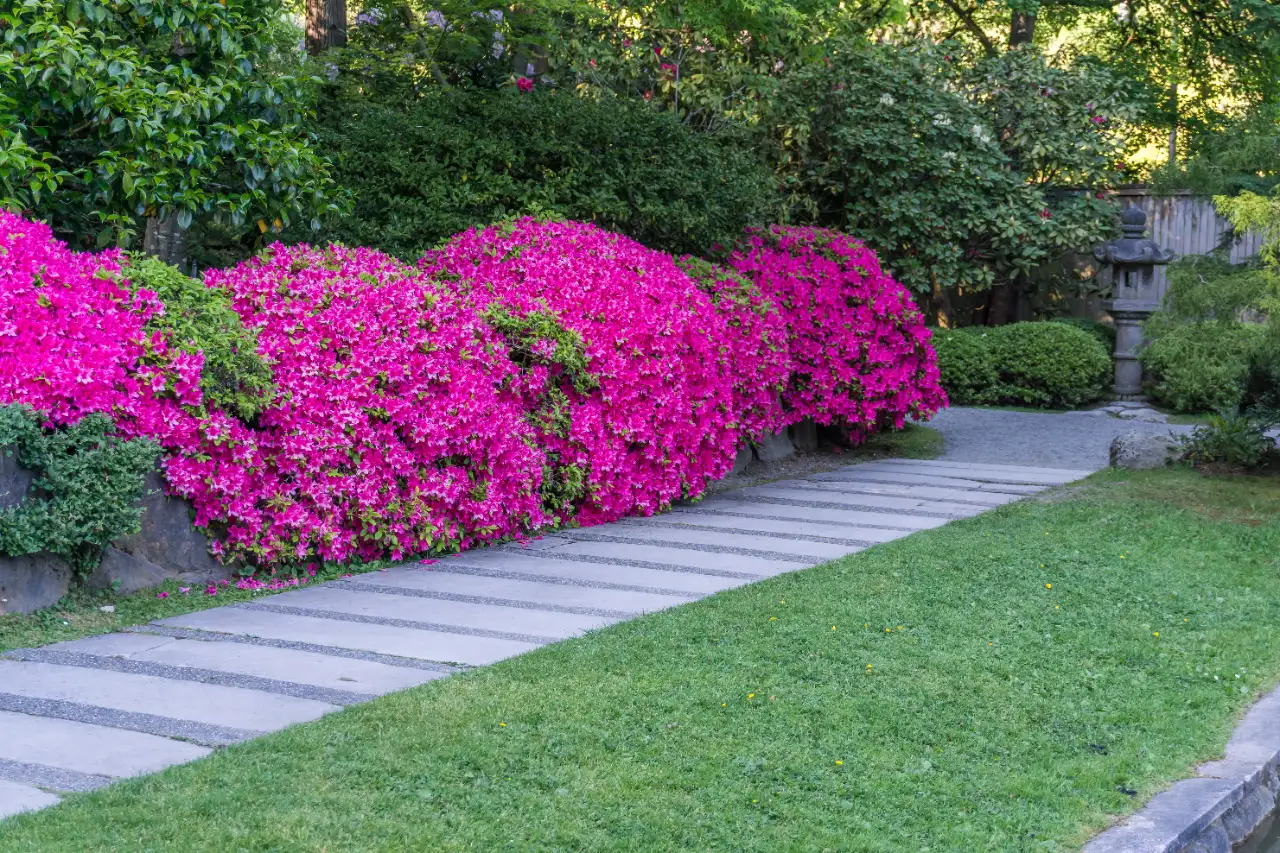
Mulch goes down on prepared beds. Not on top of last fall's leaves, and not on top of the weeds you're hoping to smother.
Clear the bed first. Pull the debris, pull the weeds out by the root, and cut a clean edge along the bed line. That edge is the difference between a bed that looks finished and one that doesn't. Without it, the mulch just looks dumped in the general area. That work is part of the spring cleanup.
Then check what's already there. If last year's mulch is still two inches deep and hasn't broken down, you don't need another full layer. Break the old crust up with a rake and add an inch to freshen the color.
Stacking fresh mulch on old year after year is how beds end up six inches deep. Nobody ever decided to do that.